Soft Sofas vs. Firm Sofas: Which One Is Better for Back Pain?
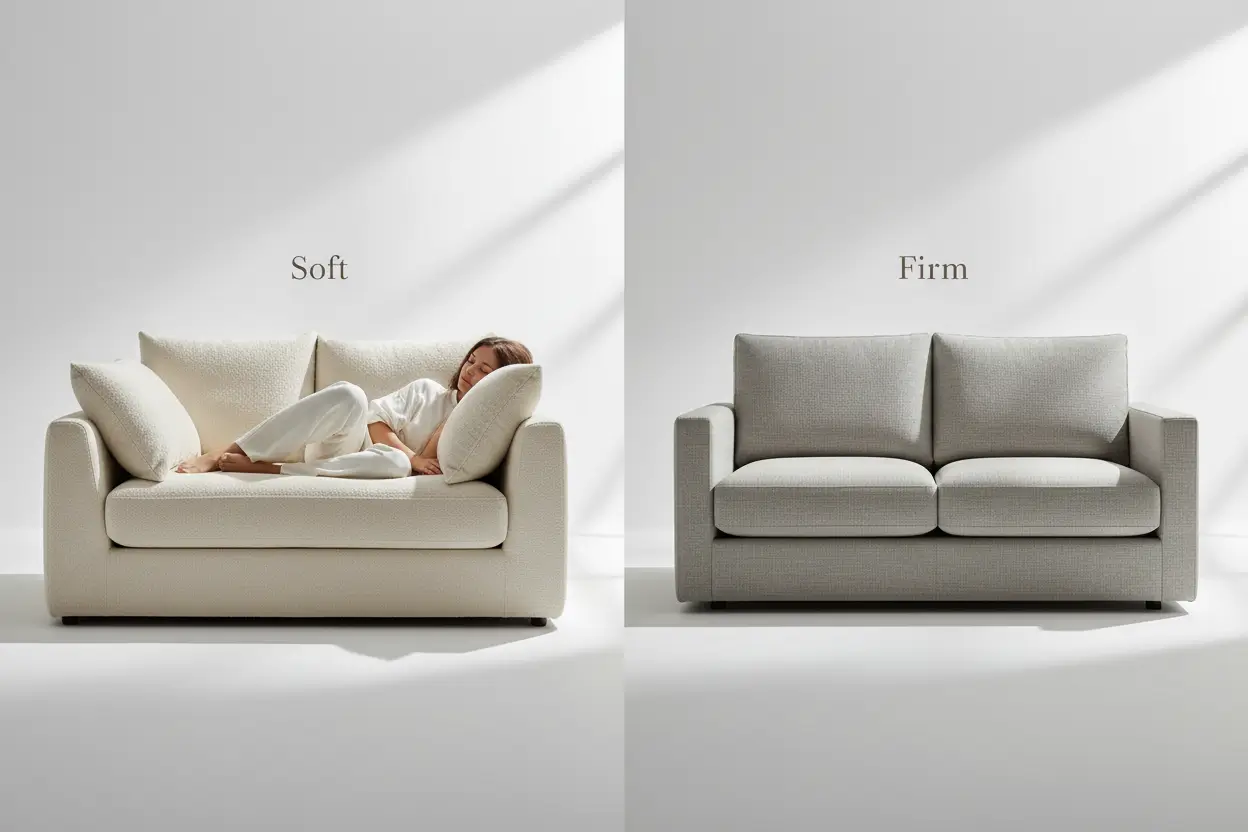
For back pain, a medium-firm sofa is better than a soft sofa - because it keeps your pelvis in a neutral position, preserves your lumbar curve, and reduces the muscle fatigue that comes from holding a slumped posture for hours. A soft sofa may feel comfortable for the first few minutes, but extended sitting in a sunken, unsupported position is a documented contributor to lower back pain and spinal strain.
What Actually Makes a Sofa Back-Friendly
Firmness alone isn't the full picture. Three additional factors determine whether a sofa supports your back over time.
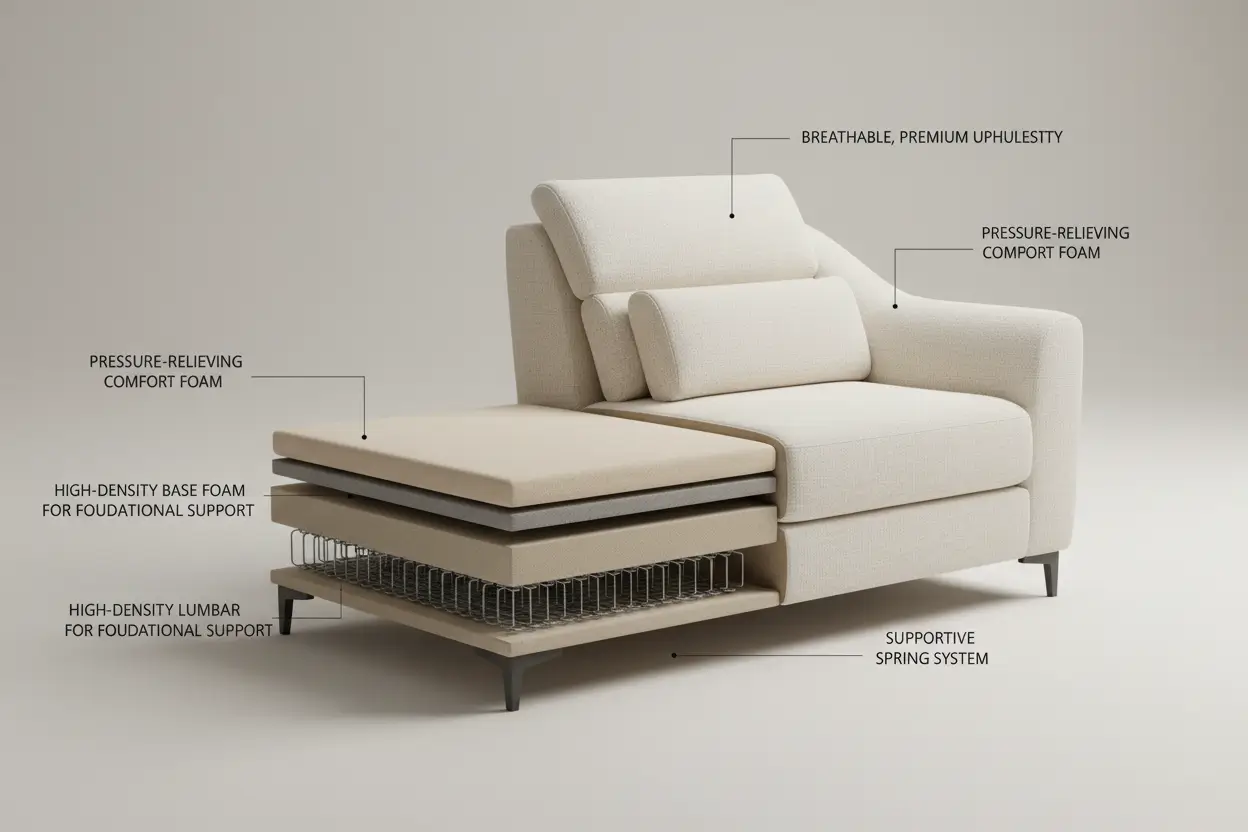
Seat depth A seat that's too deep forces you to either let your legs dangle or scoot forward and lose lumbar contact with the back cushion - neither position is neutral. The clinically recommended range is 20 to 22 inches for most adults. If you're shorter, look for 18 to 20 inches.
Seat height Your feet should rest flat on the floor with your knees at roughly 90 degrees. A seat that's too low drops your knees above your hips; too high and your thighs lose floor contact. The standard target is 17 to 19 inches, adjusted for individual height.
Back cushion height and firmness The back cushions matter as much as the seat. A sofa whose back cushions reach only the lower back - or are so overstuffed they push you forward - provides little to no lumbar support. Look for back cushions that reach at least mid-back height and maintain enough resistance to support the lumbar region, not just fill the visual space behind you.
If a sofa lacks built-in lumbar support, a separate lumbar pillow helps - but it's a workaround, not a replacement for proper back cushion design.
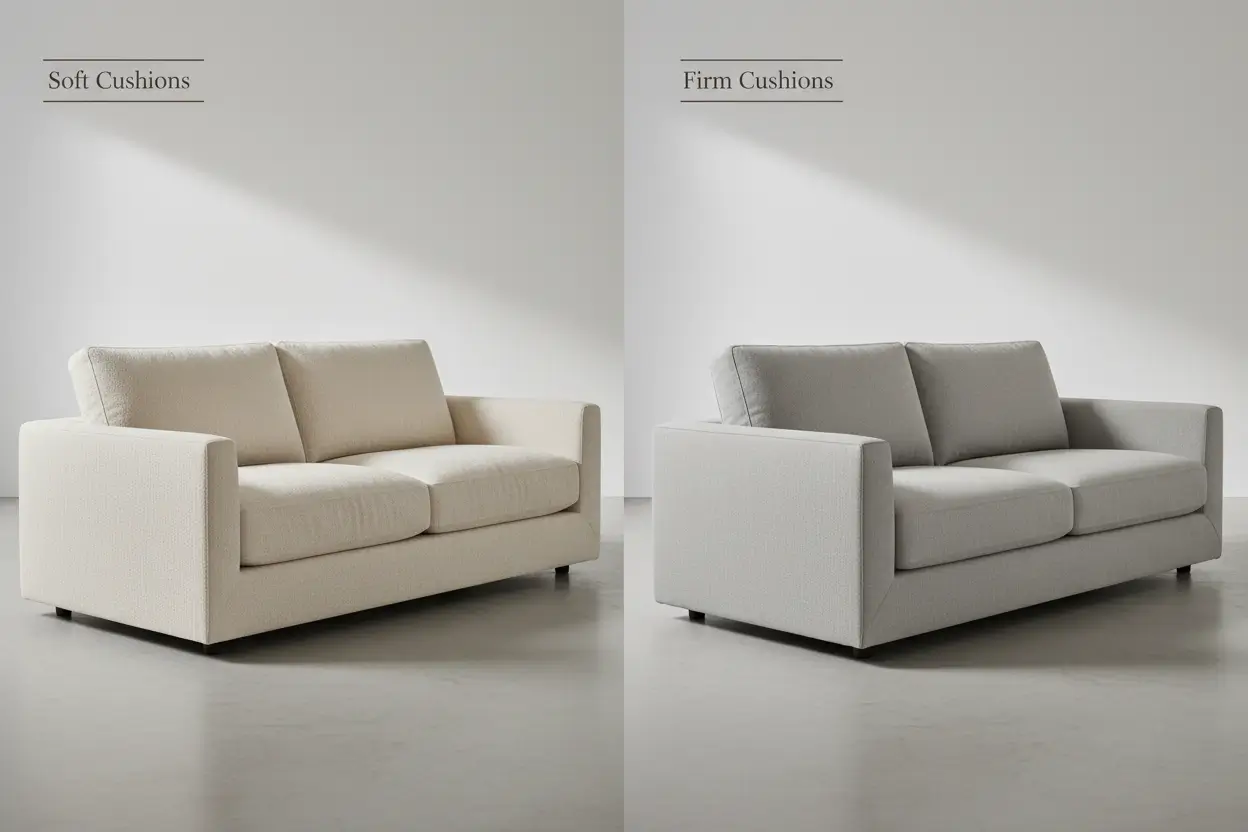
Soft Sofas vs. Firm Sofas: Which Is Better for Back Pain?
A medium-firm sofa is better for back pain. Your spine naturally forms an S-shaped curve, and healthy sitting posture keeps a slight inward curve in the lower back instead of collapsing into a slouched position. The type of sofa you choose directly affects whether that alignment is supported or compromised.
On a soft sofa, your hips tend to sink lower than your knees. This creates a posterior pelvic tilt, where the pelvis rotates backward and the natural lumbar curve flattens or even reverses.
This postural change doesn't just "look bad"-it directly alters how your spine and surrounding muscles handle load:
- Increased disc pressure:
When the lumbar curve flattens, the load on the spine shifts forward. This increases pressure on the anterior portion of the intervertebral discs, pushing the nucleus pulposus backward. Over time, this can contribute to disc bulging or irritation of nearby nerves. - Muscle compensation and fatigue:
To prevent you from collapsing further, several muscle groups begin working overtime:- The erector spinae (lower back muscles) try to pull the spine upright
- The multifidus stabilizes individual vertebrae under unstable conditions
- The hip flexors and hamstrings become imbalanced due to the tilted pelvis
Because the sofa isn't providing structural support, these muscles must stay constantly engaged. Prolonged activation leads to fatigue, stiffness, and eventually discomfort or pain.
- Ligament strain:
In a slouched position, passive structures like spinal ligaments take on more load. Unlike muscles, they are not designed for continuous tension, which can lead to micro-strain and soreness.
On a firm or medium-firm sofa, your hips stay more level with your knees. This helps maintain a neutral pelvic position and preserves the natural lumbar curve. As a result:
- The spine distributes pressure more evenly across the discs
- Core stabilizing muscles work efficiently rather than excessively
- Passive structures like ligaments are not overstressed
The body can "rest" structurally instead of constantly compensating.
That said, extremely firm seating can create pressure points, especially around the hips and thighs, which may restrict circulation and cause discomfort. This is why ergonomics experts often recommend a medium-firm sofa-it provides enough structure to support spinal alignment while still offering a comfortable level of cushioning for daily use.
When a Soft Sofa Is Still Acceptable
Soft sofas aren't universally harmful. The risk depends on how long you sit, how your body responds to load, and whether your spine already has reduced tolerance to stress.
Short or Occasional Use
A soft sofa becomes problematic mainly under prolonged static loading, not brief use.
When you sit in a slouched position, spinal structures (discs, muscles, ligaments) are placed under uneven stress. However, the body can tolerate this for short durations because:
- Intervertebral discs can temporarily redistribute pressure
The fluid inside the discs shifts under load, but short նստ periods don't allow enough time for sustained deformation or irritation. - Muscles don't reach fatigue threshold
Postural muscles like the erector spinae and deep stabilizers can compensate for a short time without accumulating strain. - Micro-recovery still happens naturally
Small posture adjustments, even unconscious ones, help relieve stress before it builds up.
👉 In simple terms:
It's not the position alone - it's how long you stay in it.
Acceptable scenario:
- 20-30 minutes of lounging
- Watching a movie occasionally
- Not your primary daily seating
No Existing Back Condition
Not everyone responds to poor support in the same way. The key factor here is tissue tolerance.
People without back pain typically have:
- Healthier intervertebral discs with better hydration and resilience
- Stronger core and spinal stabilizing muscles
- Greater tolerance to temporary postural deviations
This means:
- A slouched position may feel comfortable rather than stressful
- The body can recover quickly after standing up or changing position
- There is less risk of triggering inflammation or nerve irritation
However, for people with existing conditions such as disc degeneration, chronic muscle tension, or lower back sensitivity:
- Even small postural changes can increase discomfort
- Load distribution becomes more critical
- Recovery is slower, and irritation accumulates faster
👉 That's why medium-firm support is not "optional" for them - it's protective.
With the Right Support Accessories
A soft sofa lacks structural resistance, but you can partially compensate by adding external support that restores alignment.
These tools work because they change joint angles and load distribution, not because they make the sofa firmer.
- Lumbar pillow
Fills the gap between the lower back and the sofa
→ Helps restore the natural lumbar curve
→ Reduces disc pressure caused by slouching - Footrest (or ottoman)
Elevates the knees closer to hip level
→ Reduces posterior pelvic tilt
→ Improves overall sitting alignment - Seat wedge cushion
Tilts the pelvis slightly forward
→ Encourages a more neutral spine position
→ Decreases reliance on muscle compensation
👉 These adjustments don't fully replace a supportive cushion, but they reduce the mismatch between your body and the sofa.
The Real Takeaway
A soft sofa is acceptable when exposure is limited and your body can tolerate the load.
- Short duration → low cumulative stress
- Healthy spine → higher tolerance
- Added support → improved alignment
But when sitting becomes daily, prolonged, and unsupported, even a comfortable soft sofa can gradually contribute to fatigue, stiffness, and back pain.
Conclusion
When it comes to soft sofas vs. firm sofas for back pain, the evidence points clearly in one direction: a medium-firm sofa with proper lumbar support and appropriate seat depth is better for your spine than a plush, sink-in design. Soft sofas may feel inviting at first, but prolonged sitting in a slumped, unsupported position is a known contributor to lower back pain and spinal strain. For anyone who spends significant time seated each day, sofa firmness is a health decision as much as a comfort preference.
If you're looking for sofas that get this balance right, Atunushome is a brand worth considering. Known for designing comfortable and supportive sofa collections, Atunushome offers options that prioritize both cushion quality and long-term sitting comfort - making them a practical choice for households where back support matters as much as style.