Back-Friendly Sofa Materials: Foam, Springs, or Hybrid?
Introduction
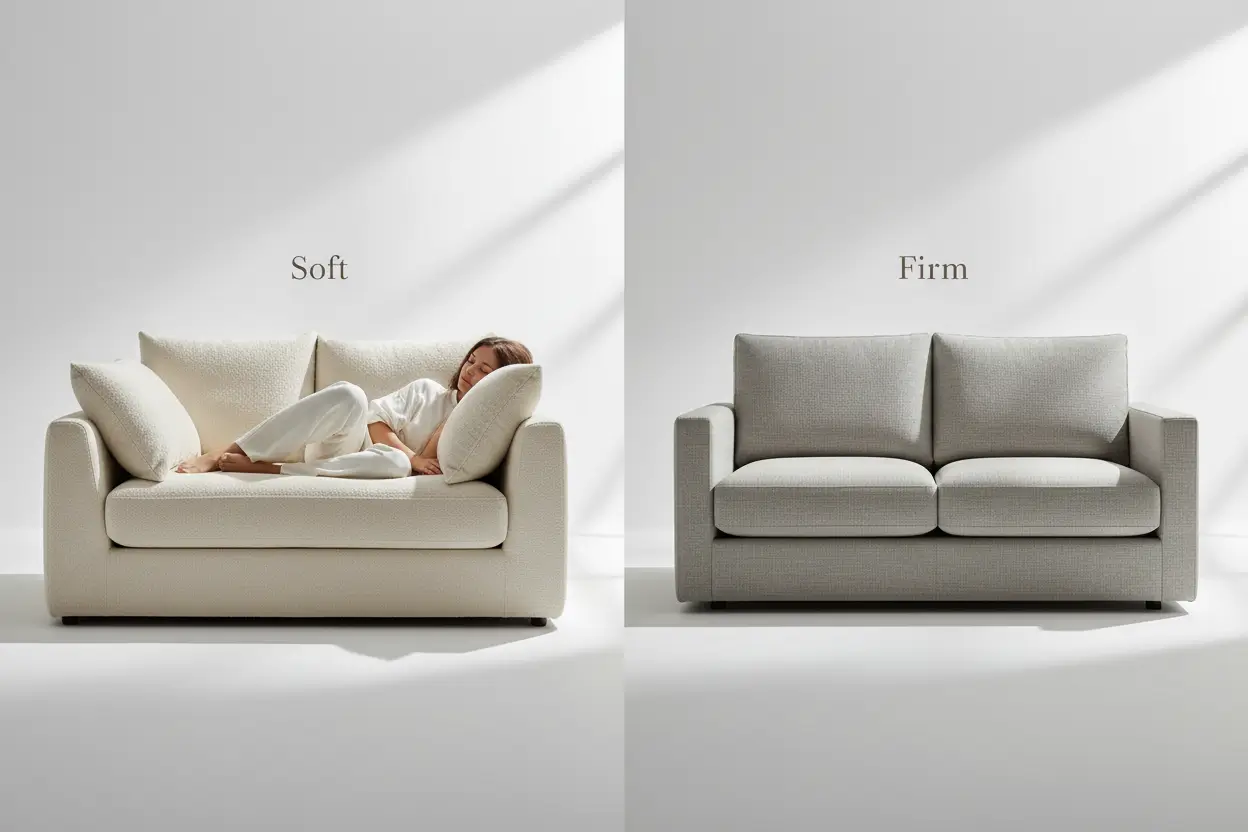
Choosing a sofa that looks stylish is easy, but choosing one that truly supports your back requires a closer look at what’s inside the cushions. The internal materials-foam, springs, or hybrid constructions-play a major role in how well a sofa maintains spinal alignment, distributes body weight, and holds its shape over time. The wrong cushion material can lead to sagging seats and poor posture, especially during long sitting sessions. Understanding how these materials work helps you make a smarter choice. In this guide, we compare foam, springs, and hybrid sofa cushions to find out which option offers the most reliable back support.
Why Sofa Cushion Material Matters for Your Back
Most people choose a sofa based on how it looks or how it feels in those first 30 seconds of sitting. But the internal construction - what's actually inside the cushion - determines whether that sofa supports your spine or slowly works against it.
A back-friendly sofa needs to do three things well:
- Maintain the natural lumbar curve so your lower spine isn't forced into a rounded, slumped position
- Distribute your body weight evenly to prevent concentrated pressure on the tailbone, hips, or thighs
- Hold its shape over time so the support you feel on day one is still there a year or two later
The material inside your cushion is the single biggest factor in whether all three of those things happen consistently.
Foam Sofa Cushions: How They Support the Spine
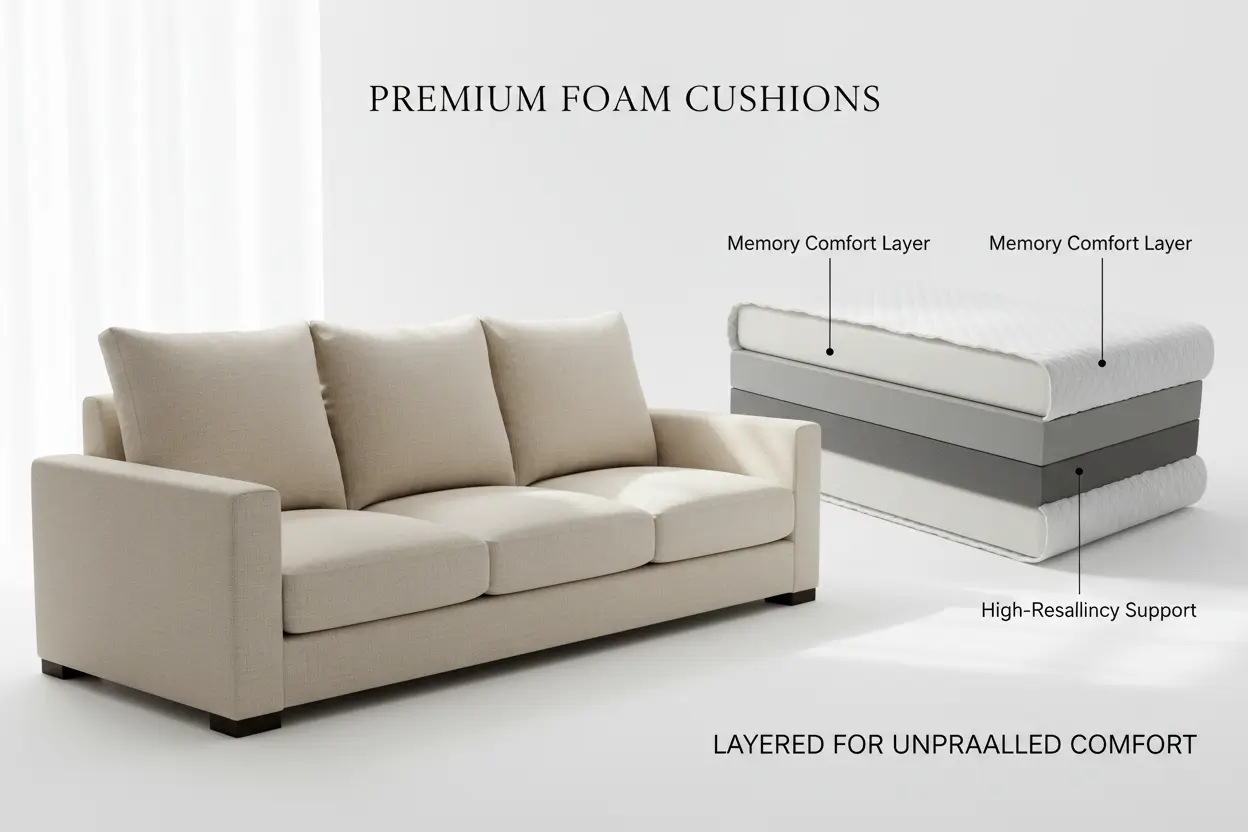
Foam is the most widely used sofa cushion material, and its quality varies enormously from one sofa to the next.
How Foam Cushions Work
Foam cushions work by compressing under your body weight and then rebounding to their original shape. The key variable is density - measured in pounds per cubic foot (lb/ft³). Higher-density foam compresses less under load, holds its shape longer, and provides more consistent resistance beneath the hips and thighs.
For back support, high-density foam prevents the deep sinking that causes posterior pelvic tilt - the backward rotation of the pelvis that flattens the lumbar curve and strains the lower back. When your pelvis stays neutral, your spine stacks naturally and requires less muscular effort to hold upright.
Foam Density Guide for Back Support
| Foam Grade | Density | Back Support Rating |
| Budget / Low | Under 1.5 lb/ft³ | Poor - sags quickly |
| Standard | 1.5-1.8 lb/ft³ | Fair - adequate for light use |
| High-Density | 1.8-2.2 lb/ft³ | Good - recommended for daily use |
| High-Resilience (HR) | 2.5 lb/ft³ and above | Excellent - best for back pain |
The Durability Problem with Low-Density Foam
The most common complaint about foam sofas is that they flatten out within one to two years of regular use. This is almost always a density problem, not a foam problem. Low-density foam - used widely in budget sofas - breaks down under repeated compression, leaving you sitting in a sunken, unsupported position.
High-density or high-resilience foam maintains its structural integrity for five to ten years with normal use, making it a much more reliable long-term investment for anyone managing back discomfort.
When Foam Works Well
Foam cushions are an excellent choice for back support when:
- The foam is rated at 1.8 lb/ft³ or higher (high-density) or 2.5 lb/ft³ (high-resilience)
- The sofa is used for moderate daily sitting, not all-day occupancy
- You prefer a consistent, non-springy feel that doesn't shift or move
Spring Sofa Cushions: How They Distribute Body Weight
Springs have been used in sofa construction for over a century, and they remain a key structural element in many sofas today. However, not all spring systems are created equal - and the type of spring matters significantly for back support.
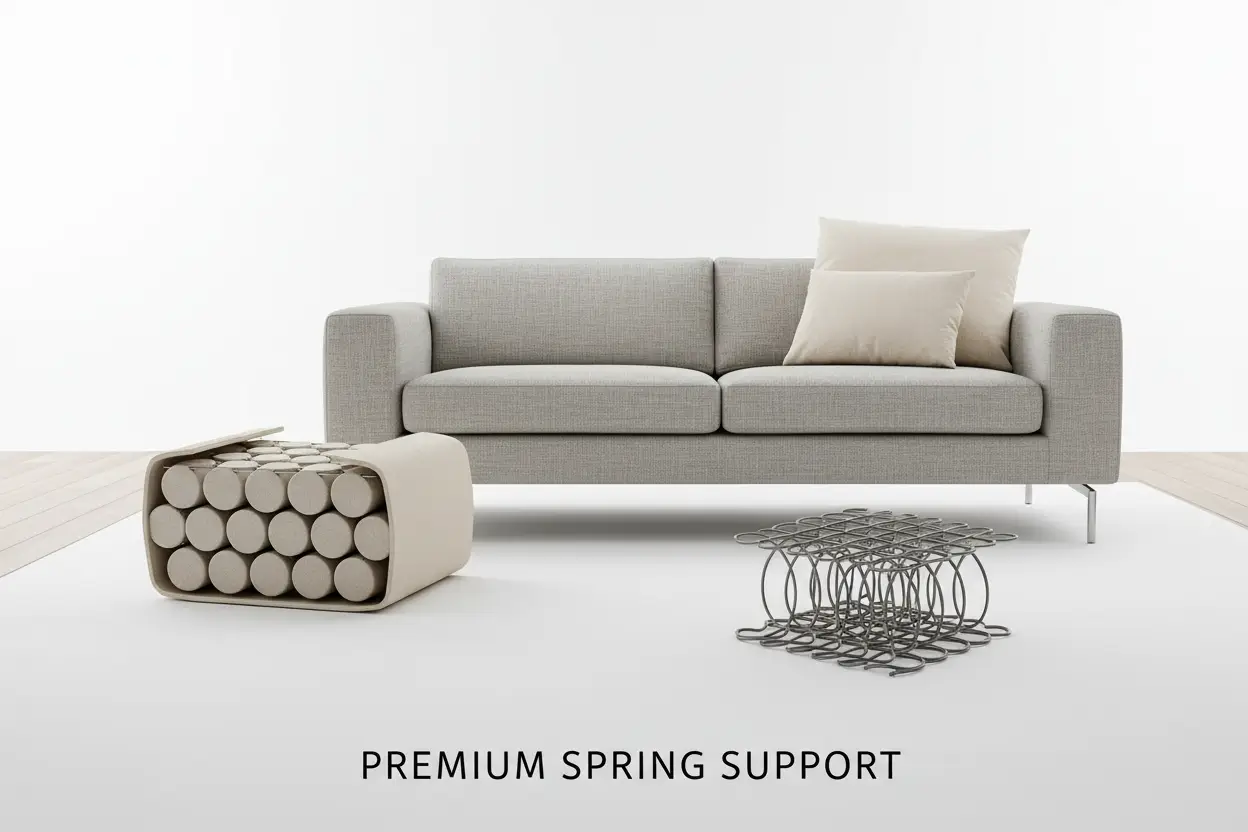
Sinuous Springs (S-Springs)
Sinuous springs, also called S-springs or no-sag springs, are zigzag-shaped metal wires stretched across the sofa frame. They're common in mid-range and budget sofas because they're inexpensive to produce.
Sinuous springs provide a baseline of support and prevent complete bottoming-out, but they don't offer targeted or individualized weight distribution. The entire spring unit moves as one piece, which means pressure isn't isolated - it spreads unevenly across the seating surface. Over time, sinuous springs can stretch, sag, or lose tension, reducing their support capacity considerably.
For back pain sufferers, sinuous springs alone - without a high-quality foam layer above them - offer limited benefit.
Pocket Coil Springs
Pocket coil springs (also called Marshall coils) are individually wrapped coil springs, each enclosed in its own fabric pocket. This is the same technology used in premium mattresses, and for good reason.
Because each coil operates independently, pocket springs respond to the contours of your specific body rather than treating the entire seating surface as one unit. Where your hips exert more pressure, those coils compress more. Where pressure is lighter, the coils remain firmer. The result is adaptive, even weight distribution that reduces pressure on the tailbone and sitting bones - a meaningful advantage for anyone with lower back or hip pain.
Pocket coil systems also maintain their structural integrity longer than sinuous springs, since the individual coils don't stretch or sag the same way flat wire systems do.
The Limitation of Springs Alone
While pocket coil springs excel at weight distribution, a spring-only construction without foam can feel too firm, too bouncy, or uneven at the surface. Most well-designed sofas combine spring systems with foam layers to balance support with comfort - which is exactly what hybrid construction achieves.
Hybrid Sofa Cushions: The Best of Both Materials
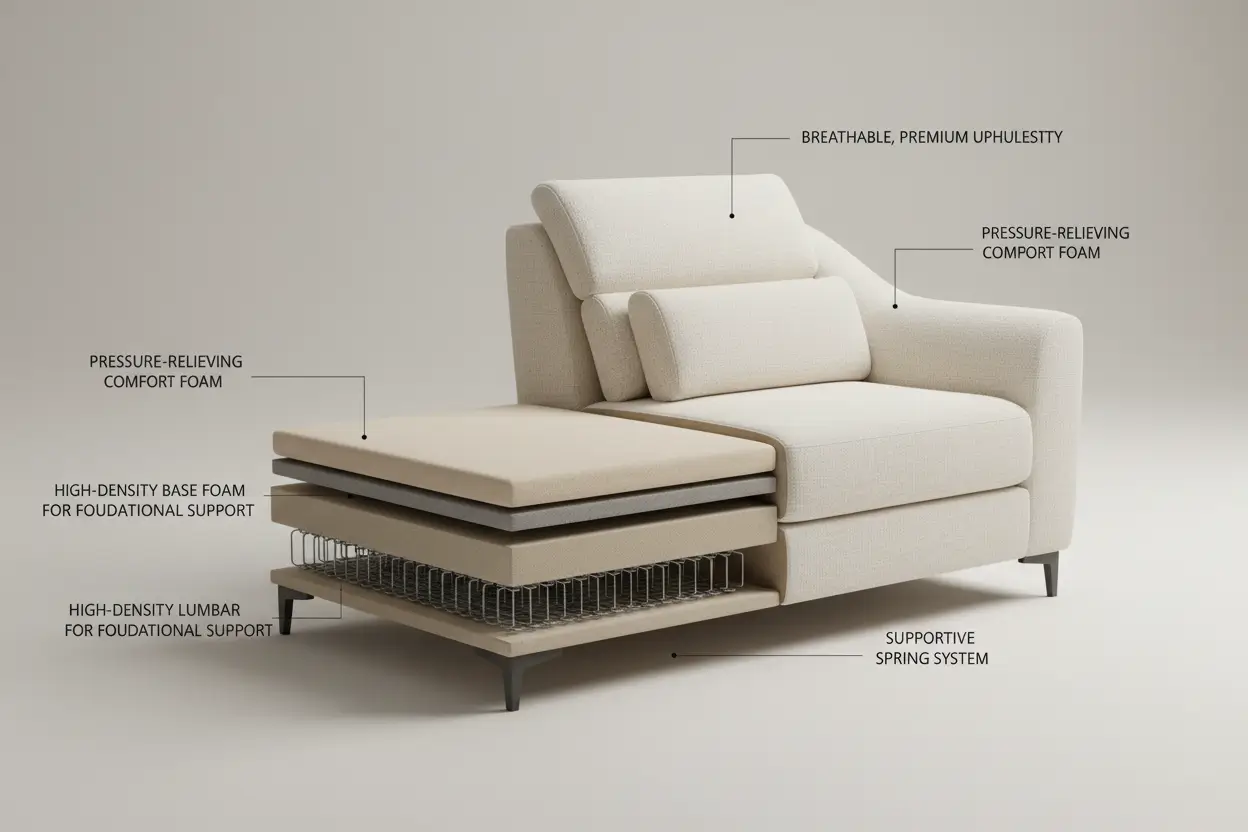
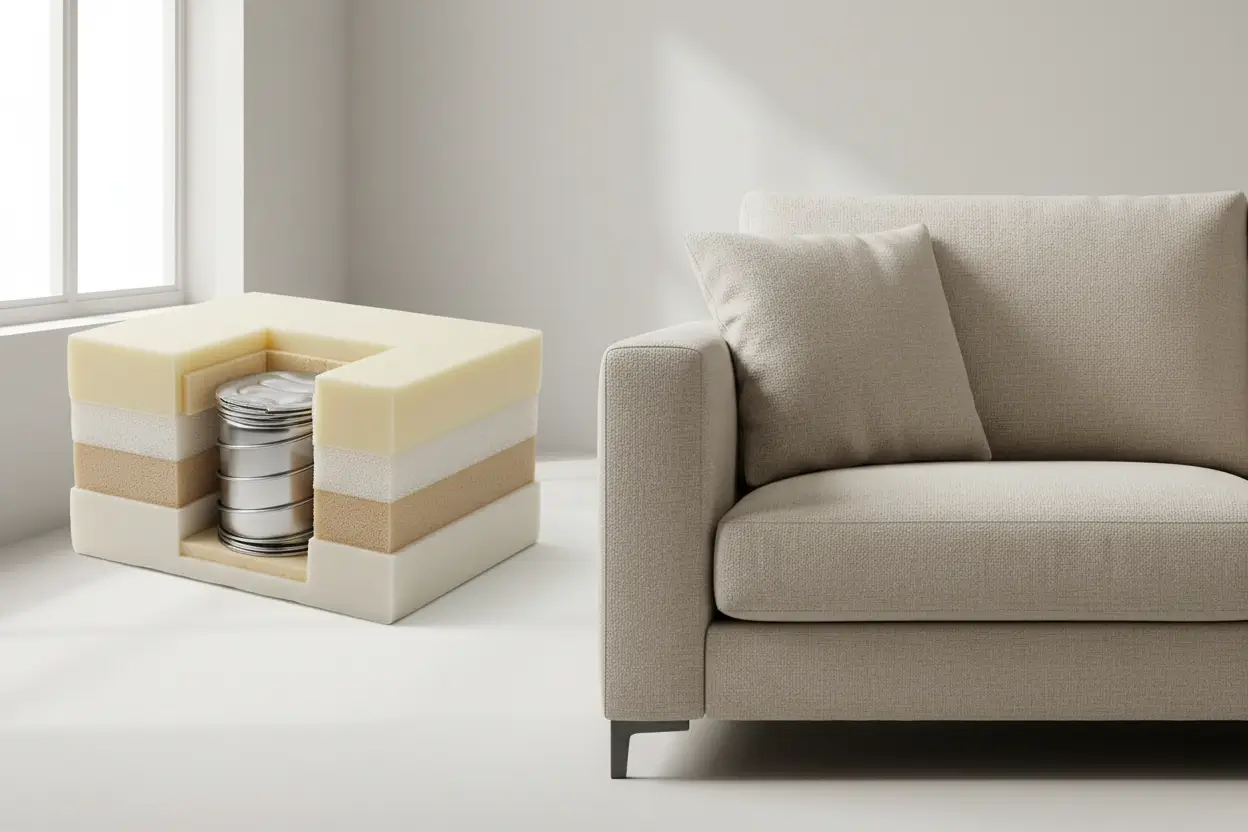
A hybrid sofa cushion combines a pocket coil spring core with high-density foam layers - and often a soft comfort layer on top. This construction is increasingly common in premium sofa lines and is widely regarded as the most back-friendly cushion option available.
How Hybrid Cushions Work
In a typical hybrid cushion, the pocket coil core sits at the center and handles structural support and weight distribution. A layer of high-density foam wraps around or sits above the coils, providing consistent firmness and preventing the springs from being felt directly through the cushion surface. A final comfort layer - often memory foam, latex, or soft foam - adds surface cushioning without compromising the underlying support.
This layered approach means:
- The springs prevent bottoming-out and distribute weight evenly across different pressure zones
- The foam maintains a firm, consistent surface that supports lumbar alignment
- The comfort layer softens the sitting experience without allowing the hips to sink into a slumped position
Why Hybrid Is the Best Choice for Back Pain
Hybrid cushions address the core failure modes of both foam-only and spring-only constructions. Foam alone can flatten over time; springs alone can feel unstable or too reactive. Hybrid cushions resist compression better than foam alone, distribute pressure more evenly than springs alone, and deliver a sitting feel that's supportive without being punishing.
For people who sit on their sofa for extended periods - working from home, watching TV for multiple hours, or recovering from an injury - hybrid construction provides the most consistent spinal support over both the short and long term.
Durability, Firmness, and Comfort: A Side-by-Side Comparison
| Feature | High-Density Foam | Pocket Coil Springs | Hybrid (Foam + Springs) |
| Lumbar support | Good | Moderate | Excellent |
| Weight distribution | Moderate | Excellent | Excellent |
| Firmness consistency | Good (if high-density) | Variable | Excellent |
| Long-term durability | Good (5-8 years) | Good (7-10 years) | Excellent (8-12 years) |
| Best for back pain? | Yes (if high-density) | Partially | Yes - top choice |
| Price range | Budget to mid-range | Mid-range | Mid-range to premium |
Which Material Works Best for Long Sitting or Daily Use?
If your sofa sees heavy daily use - more than two to three hours of sitting per day - the material choice becomes more critical, not less. Under sustained load, low-quality foam degrades faster, sinuous springs lose tension, and unsupportive seats take a greater toll on your spine.
For daily long sitting, the priority order is:
- Hybrid (pocket coil + high-density foam) - best overall support, durability, and pressure relief
- High-density or high-resilience foam - strong support if foam is rated 1.8 lb/ft³ or above
- Pocket coil with foam layer - excellent weight distribution, dependent on foam quality
- Sinuous springs with standard foam - adequate for light use, not recommended for daily extended sitting
Tips for Choosing a Back-Friendly Sofa Cushion Material
Ask about the foam density before buying. A sofa that feels firm in a showroom may be made with low-density foam that collapses within a year. Always ask the retailer or check the product specification sheet for density ratings. Anything below 1.8 lb/ft³ is a red flag for long-term support.
Prioritize pocket coils over sinuous springs. If two sofas are similarly priced and one uses pocket coils while the other uses sinuous springs, the pocket coil version will almost always provide better, more durable back support.
Sit for at least 10 minutes in-store. First impressions are deceiving. Spend enough time seated to notice how your lower back feels as your weight fully settles into the cushion. If you feel yourself sinking or rounding, the cushion isn't supportive enough.
Look for removable and replaceable cushion covers. Quality sofas with genuine back-support features often offer replaceable cushion inserts. This means you can refresh the internal foam or springs without replacing the entire sofa - a long-term value worth considering.
Check the warranty on cushion construction. Brands confident in their cushion quality will back it with a multi-year warranty against loss of firmness or structural failure. A sofa with no cushion warranty or a warranty of less than one year is often a signal of lower-grade internal materials.
Conclusion
When evaluating back-friendly sofa materials, the choice between foam, springs, and hybrid comes down to how well each supports spinal alignment, distributes body weight, and holds up over time. Hybrid cushions - combining pocket coil springs with high-density foam - consistently outperform the alternatives, especially for daily use and long sitting. High-density foam is a strong runner-up, while sinuous spring systems alone offer the least reliable back support. Whichever material you choose, density and construction quality matter far more than surface softness alone.
If you're searching for sofas that prioritize both comfort and structural support, Atunushome is a brand worth exploring. Known for crafting sofas that balance cushion quality with long-term durability, Atunushome designs with everyday sitting comfort in mind - making them a thoughtful choice for anyone who takes back health seriously.